How to Choose an Engagement Ring Setting
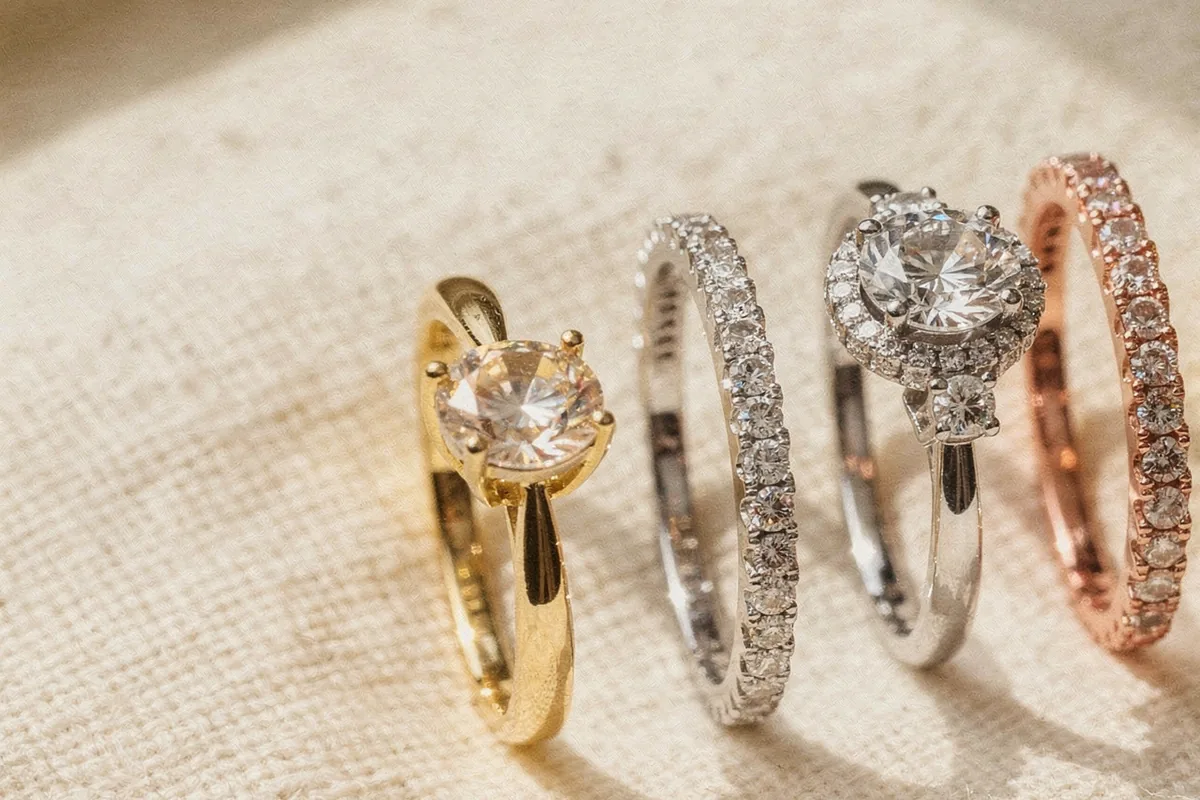
The setting is the part of the ring that holds the diamond. It shapes how the stone looks, how secure it feels and how the ring fits into daily life. These are the most popular styles and what to consider with each.
Solitaire
A single centre stone on a plain band. It is timeless, lets the diamond take centre stage and is easy to clean. It also pairs easily with a wedding band.
Halo
A ring of small diamonds surrounds the centre stone, which makes it look larger and adds extra sparkle. It is a good choice if you love a glamorous look and want to maximise visual size.
Hidden halo
Small diamonds sit beneath the centre stone, visible from the side. From above the ring looks like a clean solitaire, with a subtle surprise of sparkle in profile.
Pavé band
The band is lined with small diamonds set closely together, adding sparkle all the way around the finger. Pavé works well if you like a delicate, luminous look.
Three stone
Three diamonds, often representing past, present and future. The side stones can be the same shape as the centre or different, and they add presence to a smaller centre stone.
Metal and prongs
- Yellow gold gives a warm, classic look and flatters warmer skin tones.
- White gold is bright and modern and makes a colourless diamond look crisp.
- Rose gold is soft and romantic and works well with both white and fancy colour stones.
- Four prongs show more of the diamond. Six prongs hold it more securely, which is a good choice for active hands.
Match it to the wearer's lifestyle
If the wearer works with their hands or is active, a lower profile setting that sits close to the finger is more practical. If they love to dress up, a higher or halo setting may suit them better. Look at the jewellery they already wear for clues about their taste.
Not sure? You can design your own ring in our Quick Quote tool and see the price in about 60 seconds, then choose the exact certified diamond to go with it.